

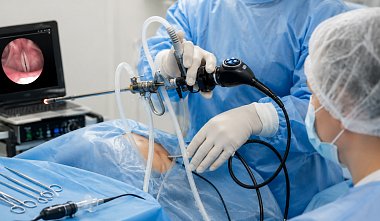
Urological diseases rarely develop rapidly. Much more often, the problem forms gradually: periodic discomfort appears, urination changes, pain and inflammatory processes develop. In the early stages, many conditions progress almost unnoticed, which is why it is especially important for a physician to conduct an accurate visual examination and assess the clinical picture without traumatic intervention.
Modern endoscopic diagnostics make it possible to examine the urinary tract from the inside, detect pathological changes at early stages, and simultaneously perform therapeutic procedures. Technological advancements have significantly transformed the capabilities of urology: procedures have become more informative, equipment more precise, and patient recovery faster. For more than three decades, ElePS has been developing and manufacturing equipment for diagnostic and surgical endoscopy, helping medical institutions implement modern standards of urological care.
What Is Endoscopy in Urology
Modern urology actively uses minimally invasive methods for diagnosing and treating diseases of the genitourinary system. One of the most informative approaches is endoscopy in urology — a method of visually examining the urinary tract and internal organs using specialized equipment.
During the examination, the physician can visually assess the condition of the urethra, bladder, ureters, and other parts of the urinary tract, as well as identify inflammatory processes, tumors, stones, strictures, and other abnormalities without open surgical intervention. An endoscope — a medical device equipped with optical, lighting, and imaging systems — is used for the procedure.
Today, endoscopic diagnostic methods make it possible to detect diseases at early stages and quickly determine the appropriate treatment strategy. Urological endoscopy is widely used both for primary diagnosis and for monitoring treatment effectiveness.
Main Types of Endoscopic Examinations in Urology
Modern urology includes several types of endoscopic examinations that differ in examination area and diagnostic objectives.
Cystoscopy
One of the most common urological examinations. During the procedure, the physician examines the bladder and urethra using a cystoscope. The method helps identify inflammation, tumors, stones, bleeding sources, and complications of chronic diseases.
Urethroscopy
Used to examine the urethra. The procedure helps detect strictures, inflammatory changes, injuries, and other pathological processes. The method is widely used in both male and female urology.
Ureteroscopy
If ureteral disease is suspected, ureteroscopy is performed. The procedure allows physicians to identify stones, tumors, and narrowed areas. In many cases, the examination is combined with therapeutic interventions.
Nephroscopy
Used for kidney examination and mainly applied in complex urological conditions. The method enables both diagnostic and therapeutic procedures with minimal tissue trauma.
Equipment for Endoscopy in Urology
The quality of a urological examination directly depends on the technical characteristics of the equipment. Modern endoscopic systems provide high image detail, physician convenience, and patient safety.
An endosurgical system typically includes:
- endoscopes of various diameters and purposes;
- high-resolution video cameras;
- light sources;
- fluid delivery systems;
- instruments for diagnostic and surgical procedures;
- equipment for visualization and storage of examination data.
Accurate visualization is essential for detecting pathological changes in time and assessing tissue condition during examinations or surgery.
ElePS manufactures equipment and instruments for diagnostic and surgical endoscopy, focusing on the needs of modern medical institutions. Proprietary developments make it possible to create systems that meet the requirements of urology departments, operating rooms, and specialized clinics.
Special attention is given to equipment reliability, image quality, and procedural convenience. Manufacturing processes cover all stages — from engineering development to service support for medical devices.
The company’s extensive partner network covers regions across Russia, CIS countries, and neighboring markets, while service programs help clinics maintain equipment functionality throughout its entire service life.
Indications for Endoscopic Diagnostics
Endoscopic examinations are prescribed for various symptoms and diseases of the genitourinary system. The decision to perform the procedure is made by a physician after consultation and evaluation of the clinical picture.
Main indications include:
- pain during urination;
- blood in the urine;
- chronic inflammatory diseases;
- suspected tumors;
- urolithiasis;
- impaired urine outflow;
- recurrent urinary tract infections;
- genitourinary injuries;
- postoperative or post-treatment monitoring.
In many cases, endoscopic methods provide more accurate information compared to certain types of imaging diagnostics. Physicians can assess tissue condition directly during the examination and perform additional procedures if necessary.
Modern diagnostic methods help detect diseases at early stages, which is especially important for oncological conditions and chronic diseases of the genitourinary system.
For patients, a major advantage is the high diagnostic value of the procedure combined with a relatively short recovery period.
How an Endoscopic Procedure Is Performed
Before the examination, the patient undergoes standard preparation, the scope of which depends on the type of procedure and clinical situation. The urologist explains the specifics of the examination, possible restrictions, and preparation rules in advance.
Most procedures are performed under local anesthesia or medical sedation. Thanks to advances in endoscopic technologies, examinations are now significantly more comfortable than before.
During the procedure, the endoscope is carefully inserted through the natural urinary tract pathways. The image is transmitted to a monitor, allowing the physician to thoroughly examine the condition of internal structures.
The duration of the examination depends on:
- the examination area;
- the complexity of the clinical case;
- the need for additional procedures;
- the scope of diagnostic objectives.
After the procedure, the patient receives recommendations for recovery and further monitoring. In many cases, hospitalization is not required.
Modern Technologies in Urological Endoscopy
The development of medical technologies has significantly expanded the possibilities of urological diagnostics and treatment. Modern endoscopic systems enable highly accurate examinations with minimal tissue trauma.
The following technologies are widely used in urological practice:
- high-resolution digital video systems;
- thin endoscopic instruments;
- laser technologies;
- enhanced-detail visualization systems;
- minimally invasive surgical techniques.
ElePS continues to improve endoscopic equipment by using modern engineering solutions and advanced scientific achievements. Equipment reliability, compliance with international standards, and a full production cycle make it possible to create medical systems востребованные in urology departments, diagnostic centers, and operating rooms throughout Russia and beyond.


