

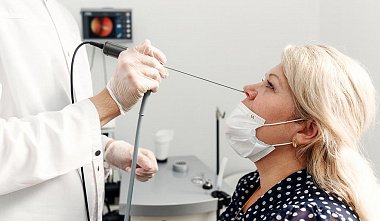
ENT endoscopy plays an important role in modern diagnostics of ear, throat, and nose diseases. The accuracy of examination directly depends on the equipment used and the quality of instruments applied in an otolaryngologist’s practice. Technological advancements have significantly expanded visualization capabilities, increased the informativeness of examinations, and reduced the time required to make a diagnosis.
For clinics, it is essential to use reliable endoscopic equipment that provides high-quality imaging, ease of use for specialists, and patient safety. The Russian company “ElePS” manufactures equipment for diagnostic and surgical endoscopy in compliance with the international quality standard ISO 13485.
What Is ENT Endoscopy
ENT endoscopy is a modern diagnostic method in otolaryngology in which a doctor visually examines hard-to-reach areas using an endoscope. The examination is performed through natural anatomical openings and allows detailed assessment of mucous membranes and internal cavities.
ENT endoscopy is used to examine the nasopharynx, larynx, and ear. The procedure is performed on an outpatient basis, suitable for both adults and children, and local anesthesia may be used if necessary. During the procedure, the doctor inserts the endoscope into the examined area, receives an enlarged image on a monitor, and evaluates tissue condition. This modern method is widely used when accurate diagnosis is required without traumatic interventions.
The procedure may be recommended for symptoms such as nasal congestion, breathing difficulties, chronic runny nose, ear pain, hoarseness, frequent inflammation, or suspected neoplasms.
What ENT Endoscopy Shows
Endoscopic examination significantly expands diagnostic capabilities and allows the doctor to obtain a detailed clinical picture of ENT organs. The examination is performed with magnification and high-quality lighting, making it possible to detect even minor tissue changes.
During the examination, the following are assessed:
- condition of the nasal mucosa and paranasal sinuses;
- signs of inflammation in the nasopharynx;
- presence of polyps and other growths;
- condition of the larynx, including vocal cords;
- individual anatomical features.
This diagnostic method is used for chronic diseases, breathing difficulties, frequent nosebleeds, and throat discomfort. It is widely applied in both adult and pediatric otolaryngology when precise and careful examination is required.
Types of Endoscopes Used in ENT Practice
In ENT practice, different types of endoscopic instruments are used to examine the ear, nose, and larynx. The choice depends on diagnostic tasks and the patient’s condition.
Rigid endoscopes are used for examining the nasal cavity and ear. They provide high-definition images, which is essential for detecting polyps, mucosal hypertrophy, and other changes.
Flexible endoscopes are used for examining the nasopharynx and larynx. Their design allows navigation through anatomical curves with minimal discomfort, making them suitable for both adults and children.
Specialized devices used in daily ENT practice include:
- Laryngoscope – used for examining the larynx and vocal cords;
- Otoscope – used for examining the ear and ear canal;
- Rhinoscope – used for diagnosing the nasal cavity and nasopharynx.
In clinical practice, not only functionality but also reliability is important. Instruments must withstand regular sterilization, maintain optical performance, and ensure accurate image transmission.
The company “ElePS” produces ENT equipment with these requirements in mind. The product line includes laryngoscopes, rhinoscopes, and other diagnostic instruments designed for intensive use in medical facilities. Full-cycle production ensures quality control at every stage and stable operation under high workload conditions.
Main Equipment for ENT Endoscopy
Modern ENT endoscopy is performed using a complete diagnostic system where image quality depends on the coordination of all components. The core of the system is the endoscope, either rigid or flexible.
Another critical component is the light source. Without proper lighting, even advanced equipment cannot deliver accurate results. Modern systems use cold light, which provides uniform illumination without overheating tissues.
The image is transmitted through a video camera to a monitor. Its quality determines how accurately the doctor can assess mucosal structure, detect minor changes, and evaluate vascular patterns.
All components are integrated into an endoscopic workstation that includes a light source, camera, processor, and monitor. The system can also include video recording modules for storing and analyzing examination results.
“ElePS” manufactures integrated ENT endoscopic systems with coordinated operation of all components. Equipment is available for delivery across Russia and CIS countries, including turnkey solutions for private and public clinics.
Equipment Setup for an ENT Office
An ENT office is equipped as a complete diagnostic system to ensure full examination of the ear, nose, and throat. Equipment selection depends on the clinic’s profile and patient load.
A standard ENT diagnostic room requires:
- rigid and flexible endoscopes;
- cold light source;
- high-resolution video camera;
- medical-grade monitor;
- endoscopic workstation;
- ENT chair;
- set of diagnostic instruments;
- data storage and archiving system;
- cleaning and disinfection tools.
For pediatric practice, smaller-diameter endoscopes are used to ensure a more comfortable procedure. In high-load clinics, having backup equipment is recommended to ensure uninterrupted workflow.
ENT Diagnostic Instruments
Endoscopic equipment in ENT practice is always used alongside basic diagnostic tools. These instruments are essential for initial examination and preparation.
Common instruments include:
- nasal speculums;
- ear funnels;
- spatulas;
- forceps;
- tweezers;
- probes;
- aspiration tips;
- sprayers;
- light sources;
- basic ENT examination kits.
In busy clinical settings, instruments must be organized for quick access. They must also maintain their properties after repeated sterilization.
How to Choose Endoscopic Equipment for ENT
Choosing endoscopic equipment for an ENT office is not just about specifications but about how the system performs in real clinical workflow. The equipment must provide stable, high-quality visualization under daily use.
Optics are the foundation of the system. They determine image clarity, tissue detail, and the ability to detect early pathological changes.
Lighting is equally important. Cold light must provide uniform illumination without shadows or overexposure.
Integration of all components into a single system ensures efficiency. The endoscopic workstation allows quick access to all functions without interrupting the procedure.
Data recording is increasingly important. It enables tracking patient condition over time and supports follow-up diagnostics.
“ElePS” develops ENT endoscopic systems as integrated engineering solutions. Optical systems, lighting, and visualization are fully coordinated to ensure stable performance and reliable diagnostic results.


