

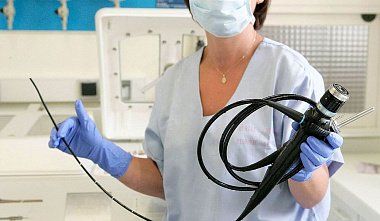
Endoscope processing in a healthcare facility: modern approaches to the problem
Endoscopic procedures are increasingly used in the diagnosis and treatment of diseases of the stomach, bronchi, colon, and other organs. However, despite their advantages over rigid instruments, the use of flexible endoscopes poses challenges, particularly the potential for the transmission of infectious agents. Numerous studies have demonstrated the need for proper cleaning, disinfection, and sterilization of endoscopes. Cleaning involves removing all foreign substances (e.g., salts, contaminants, organic matter) from objects. Cleaning is typically performed using water, mechanical action, and detergents or enzymatic preparations. Studies have shown that manual and mechanical cleaning of endoscopes reduces the number of contaminating microorganisms by approximately 10,000 times. Organic contaminants (blood, feces, respiratory secretions) prevent the penetration of microcidal agents and their contact with microbial cells. Moreover, some disinfectants are inactivated upon contact with organic material. Therefore, prior to disinfection and sterilization, thorough mechanical cleaning is necessary to remove such materials from the outer surface of the insertion tube and from the lumen of all accessible channels. The ability of bacteria to form biofilms is also a significant factor in the spread of endoscope-borne infections. Biofilms are known to adhere to the inner surface of endoscope channels and interfere with effective disinfection. Therefore, they must be removed during mechanical cleaning prior to disinfection or sterilization. Initial cleaning of endoscopes with water should be performed immediately after use to prevent secretions from drying out (this part of the reprocessing procedure is performed in the procedure room). For cleaning endoscopes, use non-abrasive detergents, including enzymatic ones, recommended by the equipment manufacturer and intended for this category of medical devices. Before mechanical cleaning, all channels should be flushed with a sufficient amount of detergent or tap water to soften, moisten, and dissolve organic residues. The air channel should be cleaned with compressed air in accordance with the manufacturer's recommendations. The insertion tube should be rinsed with a detergent solution and then with water. Accessible channels should be cleaned with a special brush to remove solid particles. The detergent solution should be pumped or aspirated through all channels to remove any material removed from the surface. Channel flushing devices and some automated endoscope reprocessing devices can be used for this purpose. All removable parts (caps and suction valves) are removed and immersed in the detergent solution. Rough surfaces of the removable parts are wiped with a brush to completely remove all organic residue. Disposable cleaning brushes should be used, or they should be thoroughly cleaned after each use, followed by high-level disinfection or sterilization. After mechanical cleaning, the parts should be thoroughly rinsed with water. It is advisable not to use non-immersible endoscopes (new models are completely immersed in the solution). The equipment should be inspected for damage at all stages of operation. If damage is detected, the device should not be immersed in the cleaning solution or continue to use. Contact the manufacturer of the endoscopic equipment. When sending an endoscope for repair, it should be considered an infected medical device and labeled accordingly. There are several levels of further processing: Sterilization is the complete destruction of all forms of living microorganisms. It is accomplished by physical or chemical means. Disinfection is a process that removes many or all pathogenic microorganisms from inanimate objects, with the exception of bacterial spores. High-level disinfection destroys all microorganisms except for large numbers of bacterial spores. Intermediate-level disinfection inactivates Mycobacterium tuberculosis, vegetative forms of bacteria, most viruses, and fungi, but does not necessarily destroy bacterial spores. Low-level disinfection kills most bacteria, some viruses, and fungi, but is not a reliable method for killing resistant microorganisms, such as Mycobacterium tuberculosis or bacterial spores. According to the Association of Professionals in Infection Control and Epidemiology (APIC) Guidelines for the Selection and Use of Disinfectants, endoscopes that penetrate cavities (e.g., esophagogastroduodenoscopes, colonoscopes, rectoscopes, bronchoscopes) should not contain any microorganisms, but may contain bacterial spores, since intact mucous membranes usually provide an effective barrier to infection by spores of common bacteria, but are susceptible to the action of other microorganisms, such as Mycobacterium tuberculosis or viruses. Therefore, endoscopes for the gastrointestinal tract and bronchial tree can be subjected to high-level disinfection rather than sterilization. Approaches to the processing of endoscopes that do not penetrate sterile cavities (stages of processing endoscopes for diagnostic examination). Foreign countries 1. Primary cleaning with clean water; 2. Cleaning with a special detergent; 3. Washing with clean water to remove detergent residues; 4. High-level disinfection; 5. Washing off disinfectant residues, drying the channels and surface of the endoscope. Russia, CIS countries 1. Primary cleaning with clean water; 2. Primary disinfection of the endoscope; 3. Washing the endoscope with clean water to remove disinfectant residues; 4. Pre-sterilization cleaning; 5. Washing with clean water to remove detergent residues; 6. Sterilization; 7. Washing off disinfectant (sterilizing) residues, drying the channels and surface of the endoscope. High-level disinfection is sufficient for endoscopes contaminated with viruses, including HIV, hepatitis B (HBV) and HCV, since these pathogens are inactivated by common chemical bactericides. Numerous studies have shown that, with proper cleaning, Mycobacterium tuberculosis is effectively killed after 20 minutes of immersion in 2% glutaraldehyde at 20°C. APIC guidelines for the selection and use of disinfectants recommend a contact time of at least 20 minutes at 20°C for high-level disinfection after pretreatment with an enzymatic detergent or a detergent that removes tissue debris and significantly reduces microbial contamination. After chemical disinfection, endoscopes are rinsed with sterile water. Rinsing the endoscope with tap water, followed by rinsing with 70% ethyl or isopropyl alcohol, is acceptable. After rinsing with water, the endoscope (especially its channels) should be thoroughly air-dried. Final drying, including rinsing with alcohol and then purging all channels with air, significantly reduces the risk of recontamination of endoscopes with microorganisms contained in water and the likelihood of microbial growth in the endoscope channels. After disinfection, endoscopes should be protected from damage and the accumulation of residual moisture. Endoscopes should not be rolled up or stored in boxes that cannot be cleaned. It is recommended to hang them vertically. Extended storage of endoscopes that have undergone high-level disinfection should be avoided. For endoscopes that enter normally sterile cavities (e.g., laparoscopes, cystoscopes, arthroscopes, and others), sterilization is considered the optimal level of processing; if this is not possible, high-level disinfection should be performed. After high-level disinfection or sterilization with a liquid sterilizing agent, endoscopes of this type should be rinsed with sterile water. To prevent microbial contamination, the use of tap water or other non-sterile water is prohibited. After washing, the endoscope should be dried using a method that prevents recontamination of the instrument. Cleaning, disinfection, or sterilization methods, as well as the means used for these purposes, must meet two main requirements: - they must be registered in the Russian Federation for the specified purposes; - they must be tested and approved by the manufacturer of the specific endoscopic equipment for use. Detergents. For cleaning endoscopes, it is preferable to use a properly diluted liquid detergent, as powdered detergents may leave a residue on the instrument. Moreover, if not completely dissolved, particles of such a detergent can become an active source of corrosion. Although acidic or alkaline detergents have some advantages, detergents with a neutral pH (7.0 - 8.5) have a lesser effect on instruments. It is not recommended to use detergents that combine cleaning and disinfecting properties for cleaning endoscopes. This is because the fixing action of the disinfectant (aldehydes or alcohols) in such products is much stronger than the cleaning action of the detergent (quaternary ammonium compounds or other surfactants). Fixing contaminants when using such products can significantly reduce the effectiveness of subsequent reprocessing and can also lead to endoscope failure. It is important to remember that detergents should be used only once: prepared immediately before use and discarded after each use. Disinfection products. Although various disinfection methods exist, chemical disinfection using liquid disinfectants is most widely used for processing endoscopic equipment, especially for high-level disinfection. When reprocessing endoscopes, cleaning and disinfection should not be combined. This is because the detergent-disinfectant solution quickly loses its microcidal activity due to contamination, which can lead not only to the transfer of infection from patient to patient but also from patients to medical personnel performing the disinfection, as well as the development of resistant microbial strains. High-level disinfectants are often referred to as "cold sterilants"—substances that destroy all forms and types of microorganisms, including bacterial spores, at room temperature. However, the exposure time for high-level disinfection is shorter than for sterilization. The antimicrobial activity of such a substance should not be significantly weakened by the presence of organic material. These substances should also not damage endoscopes or cause toxic reactions in personnel. A 2% alkaline solution of glutaraldehyde is considered the classic high-level disinfectant and the "gold standard." Its use in hospitals is widespread due to its excellent biocidal properties, activity in the presence of organic matter, and lack of damaging effects on endoscopic equipment, plastic, and rubber products. Products containing 0.55% ortho-phthalaldehyde as the active ingredient are a new product approved for use by the Food and Drug Administration (FDA). Ortho-phthalaldehyde offers significant potential advantages over glutaraldehyde. Not only does it exhibit excellent stability over a wide pH range and higher microcidal activity, but it is also non-irritating to the eyes and nasal passages. Furthermore, ortho-phthalaldehyde does not require activation before use. Along with aldehydes, products based on other chemicals can be used as high-level disinfectants. Hydrogen peroxide-based products can be considered as high-level disinfectants; however, it should be noted that hydrogen peroxide quickly decomposes and has a pronounced damaging effect on metals and other materials. The peracetic acid group is considered one of the most promising for cold sterilization and high-level disinfection. Peracetic acid in low concentrations (0.001-0.2%) is characterized by very rapid action on all microorganisms, including bacterial spores. A particular advantage of peracetic acid is that its breakdown products (e.g., acetic acid, water, oxygen, hydrogen peroxide) are non-harmful and it leaves no residue. Its activity is maintained in the presence of organic matter, and the sporicidal effect is observed even at low temperatures. Peracetic acid can cause corrosion of copper, brass, bronze, mild steel, and galvanized coatings, but these effects can be mitigated by various additives and pH adjustments. A new product containing 0.35% peracetic acid was developed as a potential alternative to glutaraldehyde, and preliminary studies have demonstrated its excellent sporicidal and mycobactericidal activity. Some substances are not recommended for processing endoscopes and endoscopic equipment due to insufficient microbiological effect spectrum (failure to meet the definition of high-level disinfectant), toxicity to personnel, or physical damage to equipment: 1. Skin antiseptics (povidone iodine, chlorhexidine gluconate, or others). 2. Hypochlorites: their corrosive effect and inactivation by organic substances limits their use. 3. Quaternary ammonium compounds (QACs): QACs can be used for processing non-critical surfaces, but are not suitable for disinfection of endoscopes, since they do not kill spores, tuberculosis mycobacteria, and hydrophilic viruses and can become a breeding ground for microorganisms. 4. Phenols: phenols are absorbed by porous materials and, even after thorough rinsing of disinfected items, cause tissue irritation and damage to mucous membranes. In addition, hazardous concentrations of phenol vapor were detected in indoor air. For these reasons, as well as due to the lack of sporicidal effect, they are not recommended for disinfecting semi-critical equipment, including endoscopes. Sterilizing Agents. Various methods can be used to sterilize endoscopes. Endoscopes that can withstand high temperatures and humidity can be autoclaved. However, most endoscopic equipment is classified as heat-sensitive and therefore should be processed using low-temperature (<60°C) methods. Low-temperature methods include chemical sterilization with liquid agents, ethylene oxide sterilization, and low-temperature hydrogen peroxide plasma sterilization. The same chemicals used for high-level disinfection can be used to sterilize endoscopes, but with longer exposure times. Compared to classic aldehyde-based sterilizers, which require extended sterilization times at 20°C (4-10 hours), peracetic acid-based sterilizers (specifically, those with a concentration of 0.35% peracetic acid) offer a significant advantage: a sporicidal effect is achieved within 10 minutes. Ethylene oxide (EO) has been the sterilization method of choice for heat-sensitive medical equipment. Despite its excellent microcidal properties, EO is toxic, mutagenic, and possibly carcinogenic. Furthermore, EO sterilization is a lengthy procedure. Therefore, the search for more advanced low-temperature sterilization methods continues. Endoscope reprocessing remains a challenging and frequently studied area worldwide. This is due to the complexity of endoscope design, their sensitivity to external influences, and the need for effective reprocessing in a minimal amount of time. At the same time, the use of modern approaches to the processing of various types of endoscopic equipment ensures patient safety during endoscopic procedures, the preservation of this expensive equipment, and significantly reduces processing time.


