

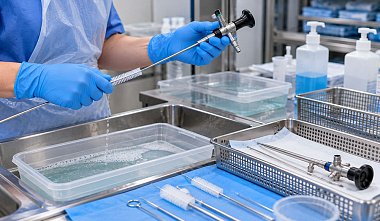
After an endoscopic examination of the nasal cavity, nasopharynx, or larynx, the medical device must be prepared for its next use. Mucus, blood, and other biological contaminants may remain on the endoscope’s surface. If they are not removed promptly, they will make subsequent cleaning more difficult and increase the risk of infection transmission between patients.
Reprocessing an ENT endoscope after a procedure consists of several consecutive stages: pre-cleaning, thorough cleaning, disinfection or sterilization depending on the intended use of the device, quality control, drying, and storage. The specific procedure depends on the endoscope’s design, the type of procedure performed, and the manufacturer’s requirements.
There is no universal set of instructions for all ENT endoscopes. Rigid optical tubes, flexible endoscopes, laryngoscopes, and auxiliary instruments require different reprocessing protocols. Before starting work, medical staff must read the instructions for the specific model and follow the procedures approved by their medical organization.
Why an ENT Endoscope Must Be Reprocessed Correctly
An ENT endoscope comes into contact with a patient’s mucous membranes. Therefore, microorganisms, mucus, and traces of blood may remain on its surface after an examination. Proper reprocessing is necessary for three reasons:
- Prevent infection transmission. Removing biological contaminants and subsequently disinfecting the device reduces the risk of transferring pathogenic microorganisms between patients.
- Maintain diagnostic quality. Contamination on optical components reduces visibility and makes it harder for the physician to assess the condition of the mucous membrane.
- Extend the equipment’s service life. Incompatible chemicals, incorrect cleaning, and failure to observe temperature limits can damage the endoscope’s lenses, seals, and connections.
Simply wiping the device after an appointment is not sufficient: mechanical cleaning removes contaminants but does not replace disinfection. At the same time, a disinfectant cannot achieve the required result if organic residues remain on the surface. The endoscope must therefore be reprocessed according to the instructions for the specific model, observing the specified procedures and exposure times.
Main Stages of ENT Endoscope Reprocessing
Reprocessing a used endoscope begins with removing visible contaminants and ends with preparing the device for its next use. Cleaning and any other procedures required for the particular model are performed between these steps.
After the procedure, the staff member:
- removes contaminants from external surfaces before they dry;
- places the used device in a closed container for transport to the reprocessing area;
- cleans the body, optical section, connections, and any channels included in the design;
- inspects the device and checks for residual contamination;
- performs high-level disinfection or sterilization, if required for that device;
- carries out any required rinsing and drying, then places the endoscope in storage.
The sequence and scope of these stages may vary depending on the design and the selected reprocessing method. For example, an endoscope with working channels requires channel processing in accordance with the instructions, whereas this step is not necessary for an optical tube without channels. Used endoscopes should be sent for reprocessing without unnecessary delay. If contaminants dry, they become more difficult to remove. Before starting work, staff must put on the required personal protective equipment and use a designated area for contaminated devices. Clean and reprocessed instruments must not come into contact with used ones.
Pre-Cleaning and Removal of Contaminants
Pre-cleaning begins immediately after the examination or procedure has been completed. Its purpose is to remove visible biological contaminants and prepare the device for the subsequent stages. If the instructions require immediate processing, this step must not be postponed until the end of the working day.
First, the staff member follows the steps permitted by the endoscope’s instructions: removes contaminants from external surfaces with a suitable wipe, uses the recommended solution, and treats accessible areas. If the design includes channels, they are cleaned and flushed according to the established protocol. Brushes or other tools that could scratch the optical surface or damage structural components must not be used.
Further cleaning is performed manually or with equipment, if the manufacturer permits the relevant method. A cleaning agent compatible with the endoscope materials is selected. The solution concentration, temperature, contact time, and mechanical cleaning method must comply with the instructions for both the cleaning agent and the medical device.
After cleaning, any remaining cleaning agent is removed. The device is then inspected under adequate lighting. No visible traces of mucus, blood, deposits, or other contaminants should remain on the surface. If contamination is found, cleaning must be repeated. Disinfection must not begin if the cleaning result is unsatisfactory.
Disinfection or Sterilization of an ENT Endoscope
After cleaning, the method of decontamination is selected according to the endoscope’s intended use, the type of tissue contact, and the manufacturer’s instructions. Devices that contact intact mucous membranes generally require high-level disinfection. If an instrument penetrates sterile tissue or comes into contact with it, sterilization is required.
For chemical disinfection, follow this sequence:
- Select a disinfectant compatible with the endoscope’s materials and design.
- Check the solution parameters: concentration, temperature, and permitted period of use.
- Treat all required surfaces, including channels if present, in accordance with the device instructions.
- Maintain the specified contact time. The exposure time must not be shortened, as this may reduce disinfection effectiveness.
- Rinse the endoscope if required by the disinfectant instructions, removing any residual solution.
For sterilization, use a method approved by the manufacturer for the specific model. A rigid endoscope may be sterilized in an autoclave only if the manufacturer explicitly confirms its compatibility with steam sterilization. Before loading, check the permitted temperature ranges and the requirements for packaging and positioning the device in the chamber. Failure to comply with these requirements may damage the optics, seals, and connections.
ElePS has been manufacturing medical endoscopic optics, equipment, and instruments for endoscopic surgery since 1991. Its product range includes devices for endoscopic examinations, including rigid optics for ENT practice. When selecting equipment, it is important to clarify in advance which cleaning and decontamination methods are approved for the specific model. An autoclavable designation applies to the products explicitly identified as such, not to all of the manufacturer’s endoscopic optics.
Reprocessing Quality Control
After the cycle is complete, confirm that all stages have been performed correctly. Visual inspection can reveal contamination and damage, but by itself it does not confirm the effectiveness of high-level disinfection or sterilization. The outcome must be assessed using the control methods specified for the particular process.
The staff member checks:
- that no visible contamination remains on external surfaces or in areas accessible for inspection;
- the integrity of the body, optical components, connections, and seals;
- compliance with the disinfectant concentration, contact time, and other disinfection parameters;
- whether the required sterilization-cycle parameters were achieved, if sterilization was performed;
- the results of the specified indicators and other control procedures;
- whether the required reprocessing records have been completed.
When an automated reprocessing unit is used, the completed-cycle data and any error messages are reviewed. For sterilization, the condition of the packaging and the results of the controls used to verify sterility are also checked. The specific control methods and their frequency are determined by applicable requirements and the medical organization’s internal documents.
If residual contamination, damage, a cycle failure, or unsatisfactory control results are detected, the device must not be used. It must be sent for reprocessing according to the established procedure or referred for technical assessment if a malfunction is suspected. Damaged optics or compromised sealing require a separate inspection: the instrument must not continue to be used until the cause has been determined.
Reprocessing records must be maintained in the prescribed format. They should include the information required by the organization about the cycle, the method used, and the control results. Documentation helps track the endoscope’s readiness for use and investigate the causes of any irregularities.
Drying and Storage of a Reprocessed Endoscope
After disinfection, rinse the endoscope if required by the instructions and dry it thoroughly. No droplets or traces of solution should remain on the body. If the design includes channels, dry them using the method specified by the manufacturer. Do not use heat or compressed air unless the instructions explicitly permit it: an unsuitable method may damage individual components.
Storage conditions depend on the reprocessing method. An endoscope that has undergone disinfection and a sterile device must not automatically be stored according to the same rules. Sterile optics should be placed in packaging or a container intended for the selected sterilization method. During storage, protect the rigid optical tube from impacts, pressure on the lenses, and contact with metal instruments. The storage area must be clean and dry, and the storage location must prevent accidental damage and recontamination.
Before use, the staff member inspects the endoscope and, if it was sterilized, checks the packaging. Wet or damaged packaging is considered a breach of the conditions required to maintain sterility; the endoscope must be reprocessed. The storage period is determined by the packaging system used and the medical organization’s rules, rather than being set identically for all models.
When equipping an ENT office, it is important to consider the number of examinations performed per shift, the types of procedures carried out by the physician, and how reprocessing is organized between appointments. ElePS has been manufacturing endoscopic optics and medical equipment since 1991. When selecting a rhinoscope, compare its optical characteristics with the clinical tasks, verify the permitted reprocessing methods, and check the storage requirements in advance. This information will help you choose a device suited to the office’s working conditions and determine what equipment will be needed for daily maintenance.


