

The positive potential of bioresonance for nasal polyposis
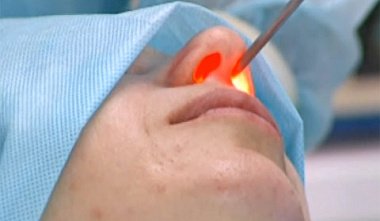
M.Yu. Korkmazov, Chelyabinsk State Medical Academy. The therapeutic or prophylactic effect of resonance is reduced to a multiple amplification of the effect of physical stimulation when the frequency of electromagnetic oscillations affecting polypous tissue coincides with the natural frequency of the diseased polypous tissue. For many reasons (allergies, chronic infections, etc.), electromagnetic oscillations that are not characteristic of the mucous membrane itself are generated on the surface of the nasal mucosa. This disrupts the dynamic balance between physiological (harmonious) and pathological (disharmonious) electromagnetic oscillations, resulting in a complex information-energy blockade, which is one of the triggers for polyp formation. Objective: To study the therapeutic potential of bioresonance in polypous rhinosinusitis. Materials and Methods: The stationary "Deta Professional" device was used as part of a complex of therapeutic measures in patients with polypous rhinosinusitis. This device is a broadband channel capable of receiving, amplifying, inverting, and returning the patient's natural electromagnetic oscillations without delay, "in real time." If this is maintained in real time, pathological oscillations should and will be neutralized by their antipode (inverted pathological oscillations). In this case, normal electromagnetic oscillations will be harmonious within the nasal mucosa and paranasal sinuses and will not be suppressed. Therapy (BRT) was administered as follows. An input electrode was inserted into one half of the nasal cavity, specifically the mucosa affected by polyps. This electrode recorded pathological signals for further processing. The converted oscillations were then transmitted through the output electrode to the affected mucosa of the other half of the nose, inverted by 180 degrees. The session lasted 15-20 minutes. Following a course of endogenous therapy (10-15 sessions), patients were prescribed exogenous BRT using portable devices capable of generating electromagnetic oscillations with specific frequency characteristics, which were recorded using a computer adapter. These characteristics were the patient's recorded and processed frequencies and represented average values, as close as possible to physiological ones. A positive aspect was the ability to receive therapy throughout the day. A course of exogenous therapy lasted 1.5-2 months. We examined 104 patients, including 73 men and 31 women, aged 15 to 58 years, with a history of chronic inflammatory diseases of the upper respiratory tract and nasal polyposis. In 23 patients (22.1%), the underlying ENT disease was complicated by bronchial asthma, and in 8 cases, aspirin intolerance was observed. A total of 87 (83.6%) patients had undergone a history of two to 27 surgeries, and in 17 (16.3%) patients, polyposis was diagnosed for the first time. All patients underwent general clinical examinations, immunological, histological, and histochemical analyses. Drug therapy was administered using state-of-the-art techniques. We performed surgical interventions in 58 (55.7%) patients, as 41 (39.4%) had obstructing polyps and 17 (16.3%) patients were additionally diagnosed with choanal polyps. Histological and pathological studies were performed in all cases and were consistent with those described in the literature. Contraindications were the same as for all other physiotherapeutic procedures. The treatment was well tolerated by patients, and no side effects were observed. After 4.5 years, we observed a delay in polyp growth in 86 patients (82.6%), 8 (7.7%) underwent repeat surgery, and 10 (10.4%) experienced polyp regression. It should be noted that asthma attacks were virtually nonexistent during this period. Efficacy was monitored using patient well-being and objective and instrumental examinations. Summarizing the 4.5 years of treatment and research, we can confidently conclude that bioresonance and frequency-electromagnetic therapy are quite effective physiotherapeutic agents in the comprehensive treatment of nasal polyposis and paranasal sinus polyps and warrant further development and implementation in ENT practice.


