

The use of argon plasma surgery in the treatment of auditory tube dysfunction
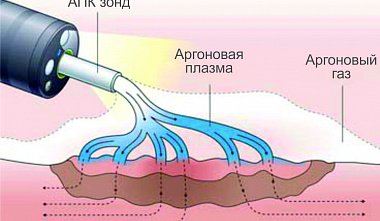
V.N. Krasnozhen Kazan State Medical Academy It is known that dysfunction of the middle ear is largely determined by the condition of the auditory tube. Dysfunction of the auditory tube can lead to a number of pathological changes, ultimately affecting hearing. Therapeutic measures in the area of ??the auditory tube are conservative or surgical in nature, depending on the stage and characteristics of the pathological process, and are aimed at eliminating the etiological factors, both within the nasopharyngeal opening of the auditory tube and the upper respiratory tract. In cases where drug or other conservative therapy is unsuccessful, surgical interventions aimed at mechanically increasing the lumen of the auditory tube are indicated (C.W. Jansen, 1985; O. Kujawski, 2000, 2001; V.M. Isaev et al., 2005). The aim of this work was to develop an effective method for treating dysfunctions of the auditory tube using argon plasma surgery. Material and methods. Reduction of the edematous mucous membrane or hypertrophy in the area of ??the pharyngeal orifice of the auditory tube was achieved by exposure to plasma, which ensured tissue drying. A special applicator, under the control of videoendoscopic assistance, was installed in close proximity (remotely!) to the pharyngeal orifice of the auditory tube and argon plasma coagulation of the modified mucous membrane was performed. In an otolaryngology clinic, 16 patients suffering from tubal dysfunction underwent surgical treatment and then observation. The duration of the disease ranged from 10 months to 4 years, the age of 32-65 years. Argon plasma coagulation of the mucous membrane in the area of ??the auditory tube and the zone of innervation of the Bock nerve was performed in 10 patients with vasomotor salpingootitis; The remaining six patients with tubal tonsil hypertrophy underwent argon plasma coagulation. Simultaneously, argon plasma correction of intranasal structures was performed by targeting the altered mucosa of the inferior and middle turbinates. Conclusion. Based on pure tone threshold audiometry, diagnostic endoscopy, and subjective patient perceptions before and after treatment, positive results were achieved in 85% of patients during a follow-up period of up to 1.5 years, demonstrating the high efficacy of argon plasma surgery of the auditory tube.


