

Robot-assisted laparoscopic sacrocolpopexy as a safe and effective method for the treatment of vaginal prolapse
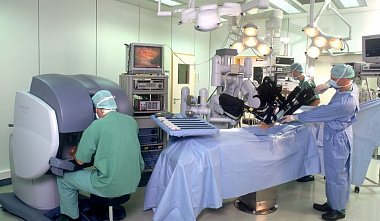
Translation: Igor Arkadyevich Shaderkin, Victoria Anatolyevna Shaderkina, urologists, Seversk Central District Hospital. Author: M. Louis Moy. There are many different approaches for treating vaginal vault prolapse, including transabdominal, transvaginal, and laparoscopic approaches. Studies have shown that transabdominal sacrocolpopexy is an effective and reliable method for treating vaginal prolapse. However, this method results in a longer hospital stay for patients compared to transvaginal and laparoscopic approaches. Naturally, it is preferable to perform the same procedures using the least invasive methods possible. Drs. Elliott, Chow, and Gettman from Rochester, Minnesota, presented their technique for performing robot-assisted sacrocolpopexy. Thirty-one patients were operated on using this technique. All had a high-grade vaginal prolapse. The mean age was 66 years (range, 47-82 years). Twenty-five patients (40%) underwent anti-incontinent surgery using the same equipment. The proprietary technique included the daVinci® robotic system. The patient was positioned supine in the lithotomy position. After abdominal insufflation, two standard laparoscopic ports were inserted for retraction (one 10 mm port subcostal on the right side, lateral to the rectus abdominis muscle, and a 5 mm port in the lower lateral quadrant). Two 8 mm robotic ports were inserted lateral to the rectus abdominis muscle, two fingerbreadths above the iliac crest. The bladder was dissected from the anterior vaginal wall using scissors and a coagulator. A vaginal retractor was used for organ dissection. Next, the posterior parietal peritoneum was opened to access the sacral promontory (promontorium), and the peritoneum was tunneled for subsequent insertion of a polypropylene mesh (distal to the inlet). The polypropylene mesh was then sutured to the vagina. The daVinci® robotic system was used for this. The main advantage of the robot was that it facilitated suturing between the implant and the vagina. To fix the mesh, size 1.0 Gore-Tex sutures were used. The authors began attaching the implant posteriorly, then moved anteriorly, and finished by fixing the ends of the implant to the sacral promontory. Halban's culdoplasty was completed by suturing the peritoneum over the mesh. The average operative time was 3.2 hours (range 2.25-4.75). Conversion was performed in one patient due to individual anatomical features. Twenty-eight patients were discharged the following day, and three were discharged on the second postoperative day. Fifteen patients did not require any analgesia in the postoperative period. Complications included port site infection in two patients (which resolved with oral antibiotics), grade 3 rectocele in one patient, and mesh site erosion in one patient 6 months postoperatively (the complication resolved with outpatient implant removal). In a survey, 30 out of 31 patients stated that they would recommend this procedure to their friends. The authors acknowledge the learning curve for this procedure, but they believe that the use of a robot significantly reduces technical difficulties. Another issue is the high cost of the daVinci® robotic system, which may limit its use. The authors concluded that robot-assisted laparoscopic sacrocolpopexy is a safe and effective treatment for vaginal prolapse. Currently, the follow-up period remains short; longer-term evaluation of the results is needed.


