

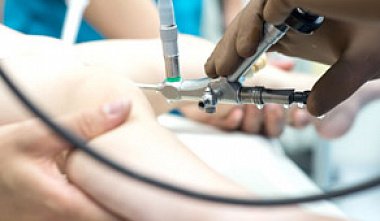
Possibilities of endoscopic correction of the most common urological diseases in children
Rashit Salikhovich Baibikov, Department of Pediatric Surgery with Advanced Training and Professional Development Course, Kazan State Medical University (Head of Department: Academician of the Russian Academy of Medical Sciences, Doctor of Medical Sciences, Professor A.A. Akhunzyanov), Children's Republican Clinical Hospital of the Ministry of Health of the Republic of Tatarstan (Chief Physician: Cand. Sci. (Med.) E.V. Karpushin), Kazan. The last quarter of the 20th and the beginning of the 21st centuries were marked by a major technical breakthrough in the development of medical equipment and the advancement of high-tech minimally invasive diagnostic and treatment methods in urology. However, many issues of endourological treatment tactics for children, especially newborns and young children, remain unresolved and debatable. The aim of this study was to evaluate the feasibility of endoscopic correction of the most common urological diseases in children. Since 1990, we have performed more than 3,000 endoscopic procedures in the urology department of the Republican Children's Clinical Hospital of the Ministry of Health of the Republic of Tatarstan. In recent years, a progressive increase in the number of therapeutic interventions has been observed, and the proportion of newborns and young children in the age structure has increased. Patients with congenital obstructive diseases of the urinary tract predominate in the structure of therapeutic interventions (84.5%) (Table 1). Further discussion of the study results is conducted in accordance with existing classifications of congenital obstructive diseases of the urinary system in children [1]. Table 1. Structure of urological diseases using endoscopic treatment. Nosology Quantity % UUT obstruction 3 0.5 UUT obstruction 72 12.3 Ureterocele 73 12.4 Vesicoureteral reflux 155 26.4 UUT obstruction 193 32.9 Urinary incontinence 9 1.5 ICD, foreign bodies 44 7.5 Urethral injuries 31 5.3 Neoplasms 5 0.9 Urogenital anomalies 2 0.3 TOTAL 587 100.0 Treatment of patients with obstructive diseases of the upper urinary tract has been the subject of ongoing research since the end of the 19th century to the present day. An attempt to eliminate stricture without plastic surgery was made as early as 1924 by Guy L. Hunner, who dilated tuberculous ureteral strictures with rigid bougies [5]. Subsequently, dilation of ureteropelvic junction (UPJ) and ureteral strictures with bougies and balloon catheters has been recognized by many authors. Recent studies have proven the success of this method in the treatment of obstructive urinary tract diseases in children, especially under 3 years of age [3]. We performed balloon dilation of the UPJ in 3 girls for stage III hydronephrosis. In one of them, the intervention was completed with the placement of a ureteral stent. In 59 children with obstructive urodynamic disorders at the level of the ureterovesical junction (VJ), 72 endoscopic dilations were performed using a balloon dilator and a set of ureterodilators. Surgical intervention was performed under X-ray and/or ultrasound control and ended with drainage of the ureter and bladder from 5 to 14 days with anti-inflammatory and anti-scarring therapy. In 16 patients, dilation was completed by installing a ureteral stent for 6-9 months (Fig. 2b). The effectiveness of the intervention was assessed by dynamic ultrasound. Control excretory urography was performed one year after the intervention or after stent removal. Endoscopic dissection of ureterocele was performed in 64 patients (73 ureters) using a resectoscope. Infravesical obstruction was simultaneously eliminated in 11 children (17.2%): dissection of the posterior urethral valve in 6 cases, dilation of metal urethral stenosis in 5. The relevance of the problem of vesicoureteral reflux (VUR) in children is determined by its high frequency, severity of the clinical course and complications. More than 30 different modifications of antireflux operations have been developed, of which the most famous are those of Politano-Leadbetter, Gregoire, and Cohen. However, none of these methods is considered ideal, although each provides a high percentage of success. They are quite traumatic, the rate of postoperative complications is 5 - 8%, relapses are possible from 3 to 40% [6, 8]. One of the alternative solutions for surgical correction of VUR is the submucosal introduction of various materials under the gaping orifice [9]. The method was first proposed in 1981 by E. Matouschek, who used Teflon paste for this purpose. According to the literature [4, 12], the most effective and less safe is the use of bovine collagen for fixation of Waldeyer's membrane of the ureter. We performed endocollagenoplasty of the ureteral orifice in 114 children (155 ureters). Collagen paste was introduced under the mucous membrane by pricking a needle into the inner surface of the medial arch of the gaping orifice of the ureter. If the orifice was incompletely closed, the paste was introduced into the lateral arch. The implant volume ranged from 0.8 to 4.0 ml. All patients underwent control sonography on the 2nd day after surgery: the distribution of collagen paste around the intravesical portion of the ureter was visualized (Fig. 3). Pyelectasis and signs of partial blockage of the orifice, noted in 2 patients, resolved spontaneously on days 3-4. Hematuria was observed in 1 patient for up to 2 days. A similar technology has proven effective in the treatment of some forms of urinary incontinence [7], especially in children who previously underwent traumatic operations for bladder exstrophy. Collagen paste was injected under the mucous membrane of the bladder neck and the membranous urethra with several injections with a volume of 4-6 to 14 ml. Successful results were obtained in 6 children after cystourethral plasty for bladder exstrophy, in 2 children with neurogenic bladder dysfunction and in 1 child after urethroplasty for total urethral epispadias. Endourological treatment of vesicourethral segment (VUS) obstruction was performed in 193 (32.9%) children (Table 2). Table 2. Structure of therapeutic endourological interventions for vesicourethral segment obstruction in children Operation name Number of patients Abs. % Transmeatal destruction-dilation of PUS 98 51.0 Transvesical destruction-dilation of PUS 50 26.0 Endoscopic dissection of the posterior urethral valve 42 21.9 Balloon dilation of urethral stenosis 2 1.1 Endoscopic resection of seminal tubercle polyp 1 0.5 Total 193 100.0 Active use of endoscopy in the diagnosis and treatment of PUS obstruction allowed us to abandon open surgeries with resection of the lesion area. Endoscopic dissection was performed in 42 children with posterior urethral valve. Out of 149 patients with stenosis of various parts of the urethra, transmeatal dilation with a mechanical urethrodilator (Fig. 4a, b) was performed in 98 patients, and transvesical dilation with instruments of an original design under urethroscopy control before and after the procedure was performed in 50 patients. In newborns with stenosis of the membranous urethra, we believe the most effective and less traumatic method is balloon dilation (2 patients). Urolithiasis (UD) is a common pathology in childhood. Over the past 20 years, we have observed more than 300 children with kidney and urinary tract stones. A significant increase (2-fold) in the incidence of UD in children in the Republic of Tatarstan has been noted [2]. According to the literature, endoscopic interventions have an undeniable advantage over traditional open surgeries in the treatment of UD. This is due to their minimal invasiveness, eliminating tissue trauma, wound suppuration, and the development of urinary fistulas [11]. Most often, we removed stones (56.9%) and foreign bodies (29.6%) from the bladder and urethra. The relevance of traumatic injuries of the urethra is evidenced by the increase in the number of patients with urethral strictures, a high frequency of complications such as recurrent strictures, urinary incontinence, impotence, chronic renal failure, and a high percentage of disability. The literature of recent years [10] has shown the informativeness of diagnostics and high efficiency of endoscopic surgical methods of treatment of patients with urethral strictures. Urethroscopy and cystourethroscopy through an epicystostomy for the purpose of antegrade catheterization of the posterior urethra allows to shorten the duration and reduce the trauma of the operation when applying the primary urethral suture (6 patients). With incomplete ruptures, it is possible to drain the urethra, which avoids traumatic operations and no less formidable postoperative complications such as urinary infiltration and stricture (3 cases). Short post-traumatic urethral strictures are amenable to endoscopic tunnelization (4 patients) and resection (18 patients) (Table 3). Nature of injury Type of intervention Number of patients Abs. % Incomplete rupture of the urethra Drainage 3 9.7 Complete rupture of the posterior urethra Antegrade drainage 6 19.3 Urethral stricture with complete obliteration of the lumen Tunnelization of the stricture 4 12.9 Urethral stricture with partial obliteration of the lumen Resection of the stricture 18 58.1 TOTAL 31 100.0 Thus, endourological treatment methods are highly informative and less traumatic in children. They are characterized by high efficiency, ensuring a significant reduction in the treatment time of patients with VUR, posterior urethral valve, ureterocele, urolithiasis and foreign bodies in the urinary system. Endourological methods can successfully treat many obstructive diseases of the urinary system in children, including traumatic urethral strictures. The possibility of repeated interventions without risk for the patient and the operated organ is noted. References: 1. Akhunzyanov A.A. Surgery of congenital obstructive diseases of the urinary organs in children. // Scientific report for the degree of Doctor of Medical Sciences. - Kazan, 1994. - 132 p. 2. Akhunzyanov A.A., Takhautdinov Sh.K., Pecheritsa G.F., et al. Features of the treatment of urolithiasis in children. // Actual problems of urology, nephrology and renal replacement therapy: Abstract. reports of the Republican scientific and practical conf. - Bugulma, 1999. - P. 46-47. 3. Babanin I.L., Kazanskaya I.V. Endoscopic treatment of the ureteral form of obstructive megaureter by transurethral ureteroplasty in young children // Materials of the Plenum of the Board of the Russian Society of Urologists. — Tyumen, May 24-27, 2005, M-2005. — P. 72-73. 4. Babanin I.L., Kazanskaya I.V., Konoplev V.D. Efficiency of endoscopic treatment of vesicoureteral reflux in children using bioimplants. In: Proceedings of the X Russian Congress of Urologists. M; 2002; p. 698-699. 5. Darenkov A.F., Martov A.G., Kvasha V.I., Simonov V.Ya. Invasive endoscopy in the treatment of ureteropelvic junction strictures. // Endoscopic surgery and remote lithotripsy. — Moscow, 1992 — P.91-94. 6. Javad-zade M.D., Guseynov E.Ya. Comparative characteristics of antireflux operations, causes of recurrence of vesicoureteral reflux in children. Urology and Nephrology 1998; 6: 16-19. 7. Zakhmatov Yu.M., Chepurov A.K., Sued A.O. Endoscopic introduction of Teflon paste for urinary incontinence in women. // Endoscopic surgery and remote lithotripsy. - Moscow, 1992 - P.29 - 31. 8. Lopatkin N.A., Pugachev A.G. Vesicoureteral reflux. Moscow: Medicine; 1990; 208 p. 9. Lopatkin N.A., Chepurov A.K., Nemenova A.A. Antireflux introduction of Teflon paste in patients with vesicoureteral reflux. // Endoscopic surgery and extracorporeal shock wave lithotripsy. Moscow, 1992, pp. 25–29. 10. Nikolaev VV, Stepanov EA Urethral strictures in children. Moscow: Meditsina, 1998, 160 p. 11. Simonov V. Ya., Kamalov AA, Kozlov SA Transurethral endoscopic surgery of ureteral stones. // Endoscopic surgery and extracorporeal shock wave lithotripsy. Moscow, 1992, pp. 35–42. 12. Haferkamp A., Mohring K. et al. Pitfalls of reped subureteral boving collagen injection for the endoscopic treatment of vesicoureteral reflux. J Urology 2000; 163(6): 1919–1921.


