

A previously unknown organ has been discovered in a human.
26.06.2013 14:34:00
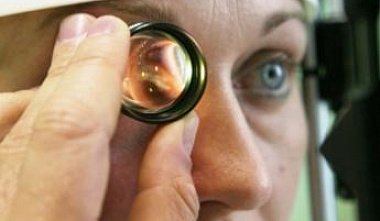
British scientists have discovered a previously unnoticed layer of the cornea in the human eye. According to the researchers, this discovery will necessitate a rewrite of all ophthalmology textbooks, as it turns out there are six corneal layers, not five as previously believed. The new layer has been named Douhet's layer after Professor Harmindea Douhet of the University of Nottingham, who made the discovery, CNews reports. This discovery has both academic and practical implications. The scientists say the discovery will improve corneal transplant surgeries. Furthermore, eye procedures will become less dangerous, as surgeons will now be able to more easily detect air bubbles in the cornea and make the right decisions during surgery. For example, doctors can move these bubbles (ideally, they shouldn't be there at all) to Douhet's layer, which is less prone to rupture. Therefore, the consequences of the surgery for patients will be less severe. Another advantage of this discovery is the ability to accurately diagnose many diseases caused by damage to the posterior cornea. Scientists believe that this may be due to defects in the new layer. This also provides an opportunity to better study conditions such as corneal edema or Descemet's membrane hernia. Furthermore, researchers suggest that keratoconus, a condition with conical corneal deformities, is caused by a tear in the sixth layer, which allows fluid to penetrate and lead to the disease. The cornea is a transparent, protective lens-shaped structure. This lens is located at the front of the eye and plays a vital role in the refraction of light. It was previously established that the cornea has five layers: the corneal epithelium, Bowman's layer, corneal stroma, Descemet's membrane, and corneal endothelium. The new layer is located on the back of the cornea between the corneal stroma and Descemet's membrane. The layer is 15 microns thick. Among its characteristics, scientists note rigidity and strength, which allow it to withstand pressure of 1.5-2 bar. Source: RBC Daily [ http://rbcdaily.ru/cnews/562949987374844?utm_source=gismeteo&utm_medium=news&utm_campaign=gism_daily5 ]


